
How to Reinforce a Front Door: Frame, Lock and Hinges
Most Forced Front Doors Fail at the Frame, Not the Lock
A reinforced front door is a whole assembly, not a better lock. When a front door is kicked in, the break almost always happens at the frame around the strike plate — the thin wooden jamb splits and the bolt pulls straight out, lock still locked. Reinforcing a front door means strengthening the door slab, the frame, the hinges and the strike plate together, so a kick meets solid wood, long screws and steel instead of a thin jamb held by short screws.
That is also how doors are tested. ASTM F476, the standard test method for the security of swinging door assemblies, tests the complete assembly — door, lock, hinges, jamb, strike and wall — because a door is only as strong as its weakest part.
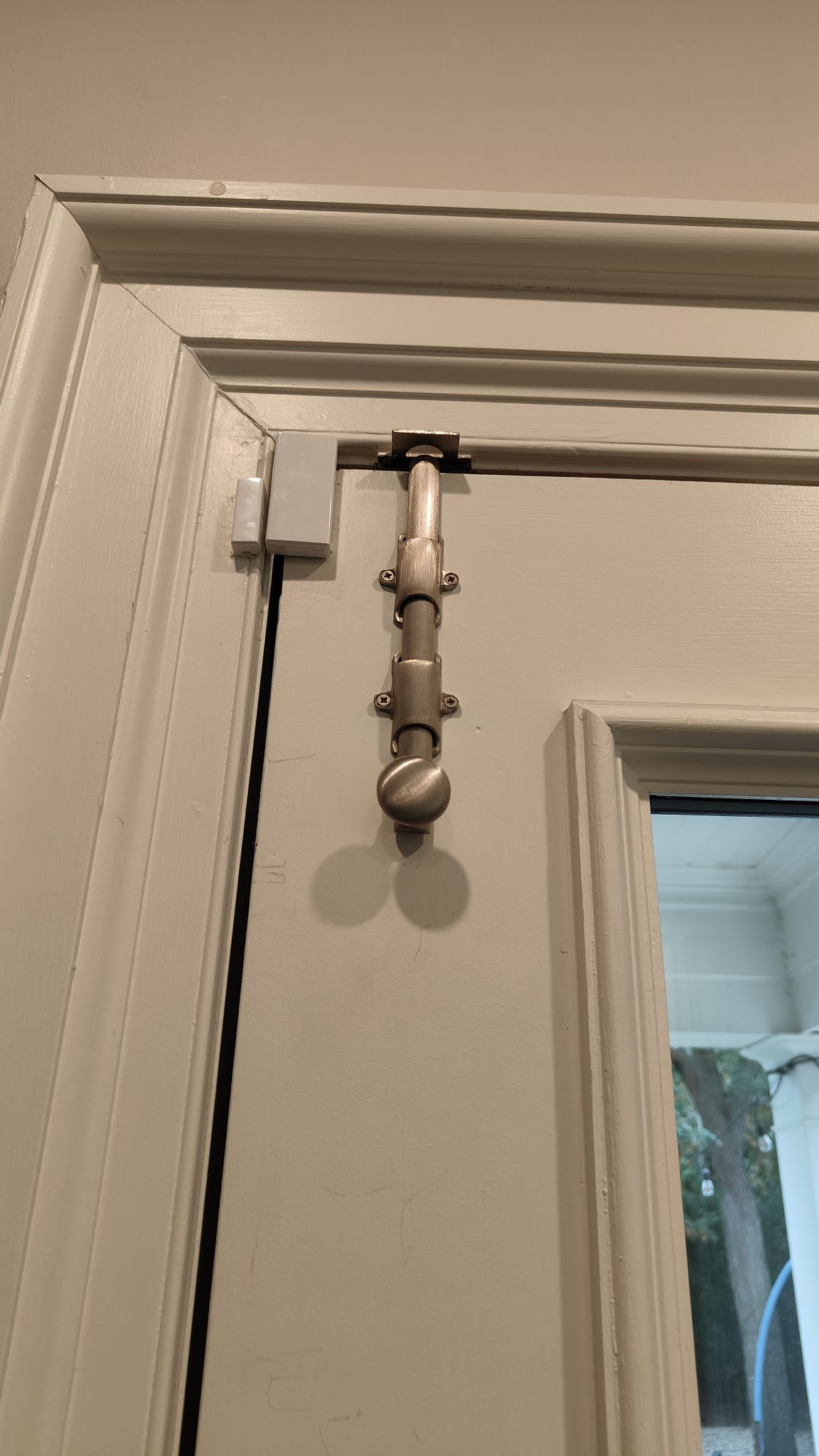
The Facts at a Glance
| Item | Detail |
|---|---|
| Service | Front door reinforcement |
| Business | Toronto Window Shield |
| Area served | Greater Golden Horseshoe |
Start With the Frame, Not the Lock
The single most effective reinforcement is also the cheapest: replace the short screws in the hinges and the strike plate with 3-inch screws that reach through the jamb and bite into the wall stud behind it. Standard builder screws are often under an inch long and grip only the thin jamb; a kick splits that jamb in one or two hits. Long screws tie the hardware to the framing of the house, so the force spreads into the wall instead of splitting the wood.
The second step is a reinforced strike plate or a jamb shield — a steel plate that wraps or backs the jamb where the bolt enters. It spreads the force of a kick across a much larger area of wood, so the jamb does not split around the strike. Door jamb reinforcement kits do the same job with steel channels fitted to the hinge side and the lock side of the frame. These are the parts that decide whether a kicked door opens or holds.
The Lock: a Grade A Deadbolt With a 1-Inch Throw
A spring latch alone is not a lock for security — it can be slipped with a card or forced back with a pry bar. A front door needs a deadbolt: a solid bolt, thrown by hand, that resists being pushed back. Look for a bolt with a 1-inch throw, and for a residential deadbolt rated to ANSI/BHMA A156.40 — Grade A is the highest grade in that standard, covering durability, strength and security.
The cylinder matters too. A high-security cylinder, rated to ANSI/BHMA A156.30, is built to resist picking, bumping and drilling — the quiet attacks that leave no damage and no noise. A good deadbolt in a reinforced frame, with a protected cylinder, is what a front door should have; a new lock in an unreinforced frame is money spent on the wrong part.
The Door Slab and the Hinges
The slab itself should be solid-core wood, steel, or fibreglass — not hollow-core. A hollow door can be kicked through regardless of the lock. Hinges deserve the same treatment as the strike: 3-inch screws on every hinge, tying them to the stud. For a door that opens outward, fit hinge bolts or security studs, so the door cannot be lifted off its hinges even if the hinge pins are removed.
Glass in or Beside the Door
Many front doors have glass — a fanlight, sidelights, or a glazed panel in the door itself. Glass beside the lock is a weak point: break it, reach in, and turn the thumbturn. Security film bonded to that glass and anchored to the frame keeps the broken pane in place, so a hand cannot reach through; laminated glass does the same job by construction. Either way, the glass next to a lock should be treated as part of the door's security, not as decoration.
In Short
Verdict: to reinforce a front door, fix the frame first — 3-inch screws into the stud and a reinforced strike plate or jamb shield — then fit a Grade A deadbolt with a 1-inch throw and a protected cylinder, on a solid slab with long hinge screws. The lock is the last step, not the first: a strong lock in a weak frame still fails at the frame.
Questions and Answers
What is the weakest part of a front door?
The frame, specifically the wooden jamb around the strike plate. Most kicked doors fail there: the jamb splits and the bolt pulls out with the lock still locked. Long screws into the stud and a reinforced strike plate fix the actual weak point.
How much does it cost to reinforce a front door?
It depends on the door and the frame — a sound frame may need only hardware and screws, while a split or rotten jamb needs more work. Toronto Window Shield prices reinforcement per door after a free in-home check, confirmed in writing before any work starts.
References
- ASTM F476, Standard Test Methods for Security of Swinging Door Assemblies — "These test methods cover door assemblies of various materials and types of construction for use in wall openings to deter unwanted intruders" and list the prime components as "door, lock, hinges, jamb, strike, and wall."
- UL, Building Science Capabilities — lists the standards used to test door security, including ASTM F476 and the ANSI/BHMA standards for residential deadbolts (A156.40), cylinders (A156.5) and high-security cylinders (A156.30).