
How to Reinforce Garage and Side Doors: the Door, the Release and the Lock
Garage and Side Doors Are Usually the Weakest Way Into a House
Garage and side doors are the entry points homeowners think about last, and that is exactly why they are targeted. The side door is often a thin slab with a spring latch and short screws, the garage door is a thin panel with an emergency release that can be reached from outside, and the door between the garage and the house is frequently left unlocked. Reinforcing them means three jobs: treat the side door like a front door, brace the garage door and its release, and lock the interior door as if it were an exterior door — because it is one.
The Facts at a Glance
| Item | Detail |
|---|---|
| Service | Garage and side door reinforcement |
| Business | Toronto Window Shield |
| Area served | Greater Golden Horseshoe |
Treat the Side Door Like a Front Door
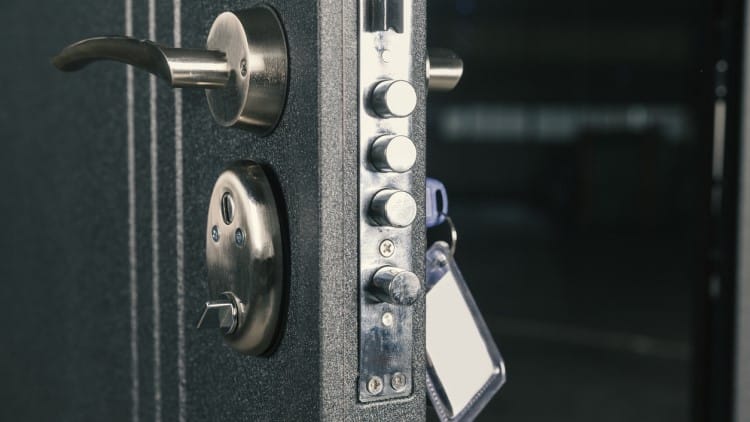
A side door should be reinforced exactly like a front door: a solid-core or steel slab, a deadbolt with a 1-inch throw rated to ANSI/BHMA A156.40, 3-inch screws in the hinges and strike plate reaching the wall stud, and a reinforced strike plate or jamb shield. The same rule applies to the door between the garage and the house. Once someone is in the garage, that interior door is the only thing between them and the house — it must be a solid door with a deadbolt, kept locked, not a hollow interior door left open.
The Garage Door Itself
A standard garage door is a thin panel that flexes and can be forced at the centre. Bracing kits stiffen the door against inward force, and a manual slide bolt on the inside locks the door independently of the opener when you are away for a while. Windows in a garage door should be filmed, like any other glass. Keep the opener remote out of a car parked outside — a remote in the car is a key left in the door — and use a rolling-code opener so the code cannot be captured and replayed. A smart opener that reports when the door opens adds warning, but it is detection, not reinforcement: it tells you the door moved, it does not stop it moving.
The Emergency Release — Secure It, Never Disable It
Every automatic garage door opener has a manual emergency release — usually a red handle on a cord — that disconnects the door from the opener so it can be opened by hand in a power outage. On some doors, a gap at the top lets someone reach that handle from outside with a tool and pull it. The fix is a manufacturer-approved release shield: a guard that blocks outside reach while keeping the release fully working from inside. Never zip-tie, remove, shorten or otherwise disable the release. It is a safety device, required under the federal safety standard for garage door operators (16 CFR Part 1211, built on UL 325), and industry guidance from DASMA says the manual disconnect is what you use when the opener cannot open the door — in a power outage, a disabled release can trap a car, or a person, inside.
In Short
Verdict: to reinforce garage and side doors, give the side door the full front-door treatment — solid slab, Grade A deadbolt, long screws and a reinforced strike — keep the door between garage and house locked, brace the garage door, and shield the emergency release without ever disabling it. The release is a safety device first; security work around it must leave it working.
Questions and Answers
Should I zip-tie the garage door emergency release?
No. The release is a safety device that lets you open the door by hand in a power outage, and disabling it is unsafe and against the operator safety standard. Use a manufacturer-approved release shield instead — it blocks outside reach and leaves the release working from inside.
Is the door between the garage and the house an exterior door?
Treat it as one. Once someone is inside the garage, it is the only barrier into the house, so it should be a solid door with a deadbolt, kept locked — not a hollow interior door.
References
- Garage Results, Open a Garage Door From Outside Safely & Secure It — "Do not zip-tie, remove, shorten, or otherwise disable the release. A security shield is acceptable only when it blocks unauthorized reach from outside without preventing normal operation from inside," citing DASMA Technical Data Sheet 385 and the federal standard 16 CFR Part 1211 (UL 325).
- ASTM F476, Standard Test Methods for Security of Swinging Door Assemblies — "These test methods cover door assemblies of various materials and types of construction for use in wall openings to deter unwanted intruders" and list the prime components as "door, lock, hinges, jamb, strike, and wall."